List of 100 Companies That Use HubSpot in 2026

Wondering which companies use HubSpot? It is one thing to hear that the platform is popular. It is another to see the actual names, industries, and team sizes behind that claim.
We compiled 100 real businesses running HubSpot right now, from scrappy startups to household brands, so you can judge for yourself whether the platform attracts companies that look like yours.
About This List
We did the legwork. Our team at CRM360 dug through case studies, partner directories, and public records to compile this list. With 200+ CRM projects under our belt, we also know what to look for when a company’s HubSpot usage is real versus just a logo on a landing page.
Thinking About Joining This List?
If HubSpot keeps showing up in your research, there might be a good reason. We help companies evaluate and launch the right CRM without the guesswork. Get in touch here and we will help you figure it out.
100 Companies That Use HubSpot
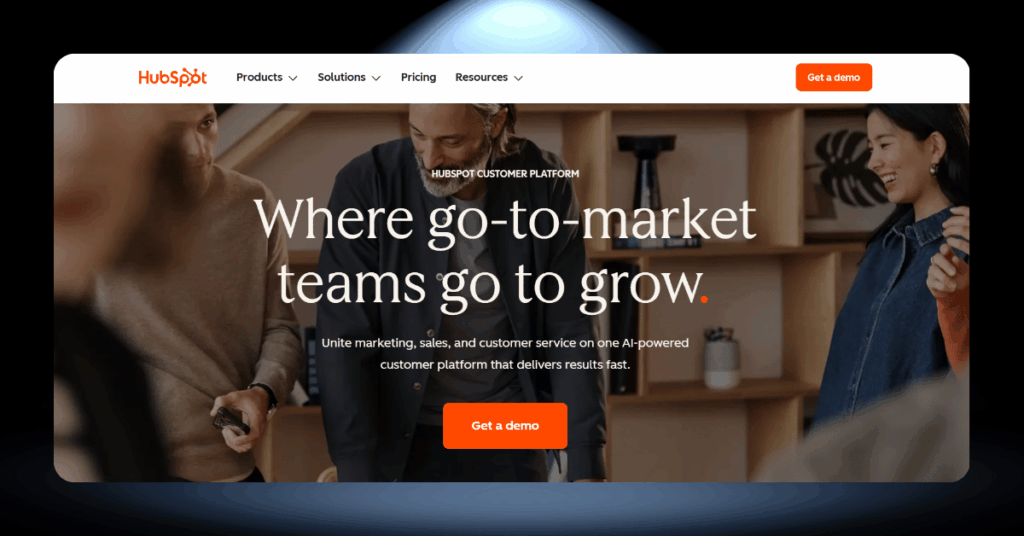
Here are 100 verified HubSpot users spanning Fortune 500 giants, mid-market firms, and fast-growing startups from across the globe. Revenue and employee figures are approximate and drawn from publicly available data.
| Company + Website | Country | Industry | Employee Size* | Revenue* |
|---|---|---|---|---|
| Walmart (walmart.com) | United States | Retail | 2,100,000 | $681B |
| Shell (shell.com) | United Kingdom | Oil & Gas | 96,000 | $284B |
| Accenture (accenture.com) | Ireland | IT Consulting | 733,000 | $64.1B |
| General Dynamics (gd.com) | United States | Aerospace & Defense | 113,000 | $42.3B |
| Cardinal Health (cardinalhealth.com) | United States | Healthcare | 48,000 | $205B |
| Deloitte (deloitte.com) | United Kingdom | Professional Services | 457,000 | $67.2B |
| SLB (slb.com) | United States | Oil & Gas | 99,000 | $33.1B |
| Keller Williams (kw.com) | United States | Real Estate | 145,000 | $370B |
| Motorola Solutions (motorolasolutions.com) | United States | Technology | 21,000 | $10.1B |
| Sumitomo Electric (sumitomoelectric.com) | Japan | Manufacturing | 281,000 | $28.7B |
| Peloton (onepeloton.com) | United States | Fitness Technology | 3,800 | $2.7B |
| Trustpilot (trustpilot.com) | Denmark | Technology | 900 | $176M |
| Zendesk (zendesk.com) | United States | Software | 6,000 | $1.7B |
| DoorDash (doordash.com) | United States | Food Delivery | 19,100 | $8.6B |
| SoundCloud (soundcloud.com) | Germany | Media & Entertainment | 400 | $300M |
| Trello (trello.com) | Australia | Software | 9,000 | $3.8B |
| Zapier (zapier.com) | United States | Software | 800 | $250M |
| Buffer (buffer.com) | United States | Social Media Software | 85 | $20M |
| ClassPass (classpass.com) | United States | Fitness Technology | 700 | $200M |
| Airstream (airstream.com) | United States | Manufacturing | 2,500 | $1B |
| Rock Content (rockcontent.com) | Brazil | Content Marketing | 500 | $50M |
| GitBook (gitbook.com) | France | Software | 80 | $15M |
| Sandler Training (sandler.com) | United States | Training & Education | 2,000 | $400M |
| Camp Network (campnetwork.com) | United States | Education | 100 | $10M |
| Aerotech (aerotech.com) | United States | Manufacturing | 800 | $200M |
| Frontify (frontify.com) | Switzerland | Software | 300 | $40M |
| Litmus (litmus.com) | United States | Email Marketing Software | 250 | $50M |
| Crazy Egg (crazyegg.com) | United States | Analytics Software | 50 | $30M |
| Mailshake (mailshake.com) | United States | Sales Software | 50 | $10M |
| Lucidpress (marq.com) | United States | Design Software | 200 | $25M |
| monday.com (monday.com) | Israel | Software | 2,200 | $730M |
| Canva (canva.com) | Australia | Design Software | 4,000 | $2.3B |
| Wistia (wistia.com) | United States | Video Hosting | 200 | $50M |
| Calendly (calendly.com) | United States | Software | 600 | $250M |
| Drift (salesloft.com) | United States | Software | 600 | $100M |
| Clearwing Productions (clearwing.com) | United States | Events & Entertainment | 500 | $80M |
| Morehouse College (morehouse.edu) | United States | Education | 600 | $150M |
| Électricité de France (edf.fr) | France | Utilities | 171,000 | $151B |
| United States Air Force (af.mil) | United States | Government | 689,000 | $209B |
| Suzuki (globalsuzuki.com) | Japan | Automotive | 70,000 | $33B |
| Casio (casio.com) | Japan | Electronics | 10,800 | $1.8B |
| Subaru (subaru.com) | Japan | Automotive | 37,000 | $28B |
| Loom (loom.com) | United States | Software | 300 | $100M |
| Mention (mention.com) | France | Software | 100 | $15M |
| Databox (databox.com) | United States | Analytics Software | 80 | $12M |
| Pipedrive (pipedrive.com) | Estonia | Software | 1,000 | $200M |
| G2 (g2.com) | United States | Software Reviews | 600 | $100M |
| Hotjar (hotjar.com) | Malta | Analytics Software | 400 | $60M |
| WeTransfer (wetransfer.com) | Netherlands | Software | 400 | $80M |
| Typeform (typeform.com) | Spain | Software | 500 | $70M |
| Pendo (pendo.io) | United States | Software | 700 | $150M |
| Algolia (algolia.com) | United States | Software | 600 | $100M |
| Unbounce (unbounce.com) | Canada | Marketing Software | 250 | $50M |
| Chargebee (chargebee.com) | United States | Fintech | 700 | $100M |
| Workiva (workiva.com) | United States | Software | 2,700 | $600M |
| Finastra (finastra.com) | United Kingdom | Fintech | 8,000 | $1.7B |
| Resolver (resolver.com) | Canada | Software | 500 | $70M |
| Netsuite (netsuite.com) | United States | Software | 10,000 | $2B |
| ColdJet (coldjet.com) | United States | Manufacturing | 300 | $60M |
| T. Rowe Price (troweprice.com) | United States | Financial Services | 7,900 | $6.5B |
| Degreed (degreed.com) | United States | EdTech | 500 | $80M |
| Ceros (ceros.com) | United States | Software | 350 | $50M |
| Klarna (klarna.com) | Sweden | Fintech | 5,000 | $1.9B |
| Bolt (bolt.eu) | Estonia | Ride-Hailing | 5,500 | $600M |
| Taxfix (taxfix.de) | Germany | Fintech | 400 | $50M |
| N26 (n26.com) | Germany | Banking | 1,500 | $300M |
| Flywire (flywire.com) | United States | Fintech | 1,200 | $430M |
| Treatwell (treatwell.co.uk) | United Kingdom | Beauty & Wellness | 400 | $50M |
| Personio (personio.com) | Germany | HR Software | 2,000 | $200M |
| Preply (preply.com) | United States | EdTech | 600 | $70M |
| Pleo (pleo.io) | Denmark | Fintech | 850 | $100M |
| ContentSquare (contentsquare.com) | France | Analytics Software | 1,800 | $200M |
| Spendesk (spendesk.com) | France | Fintech | 400 | $40M |
| Back Market (backmarket.com) | France | E-commerce | 700 | $600M |
| Qonto (qonto.com) | France | Fintech | 1,400 | $200M |
| Factorial (factorialhr.com) | Spain | HR Software | 1,000 | $100M |
| SumUp (sumup.com) | United Kingdom | Fintech | 3,000 | $1B |
| GoCardless (gocardless.com) | United Kingdom | Fintech | 700 | $132M |
| Notion (notion.so) | United States | Software | 800 | $250M |
| Figma (figma.com) | United States | Design Software | 1,500 | $600M |
| Gymshark (gymshark.com) | United Kingdom | Retail & Apparel | 900 | $600M |
| Wise (wise.com) | United Kingdom | Fintech | 5,500 | $1.1B |
| Xero (xero.com) | New Zealand | Accounting Software | 5,300 | $1.1B |
| Atlassian (atlassian.com) | Australia | Software | 12,000 | $4.4B |
| Freshworks (freshworks.com) | India | Software | 5,200 | $600M |
| Zoho (zoho.com) | India | Software | 15,000 | $1B |
| BambooHR (bamboohr.com) | United States | HR Software | 1,600 | $300M |
| Braze (braze.com) | United States | Marketing Software | 1,600 | $470M |
| ActiveCampaign (activecampaign.com) | United States | Marketing Automation | 1,000 | $200M |
| Cin7 (cin7.com) | New Zealand | Inventory Software | 500 | $70M |
| Toast (toasttab.com) | United States | Restaurant Technology | 5,000 | $3.9B |
| Rappi (rappi.com) | Colombia | Delivery App | 3,000 | $800M |
| Glovo (glovoapp.com) | Spain | Delivery App | 1,200 | $600M |
| Revolut (revolut.com) | United Kingdom | Fintech | 8,000 | $2.2B |
| Wolt (wolt.com) | Finland | Delivery App | 8,000 | $1.4B |
| Infobip (infobip.com) | Croatia | Communications | 3,500 | $2B |
| Sendcloud (sendcloud.com) | Netherlands | Logistics Software | 400 | $50M |
| FreshBooks (freshbooks.com) | Canada | Accounting Software | 500 | $100M |
| Jobber (getjobber.com) | Canada | Field Service Software | 800 | $100M |
| PandaDoc (pandadoc.com) | United States | Software | 700 | $100M |
| Cognism (cognism.com) | United Kingdom | Sales Intelligence | 500 | $100M |
*Employee size and revenue figures are approximate and based on publicly available data. Numbers may vary depending on source and reporting period.
Top Industries That Rely on HubSpot
HubSpot’s customer base covers a huge range of sectors, though a few industries punch well above their weight. The breakdown below is based on aggregated data from Enlyft and 6sense, and it gives you a clear picture of where HubSpot adoption is strongest.
Tech-related industries dominate the top of the list, but what stands out is how far HubSpot’s reach extends beyond the software world. Retailers, healthcare organizations, manufacturers, and financial firms all show up in meaningful numbers.
Why Companies Keep Choosing HubSpot
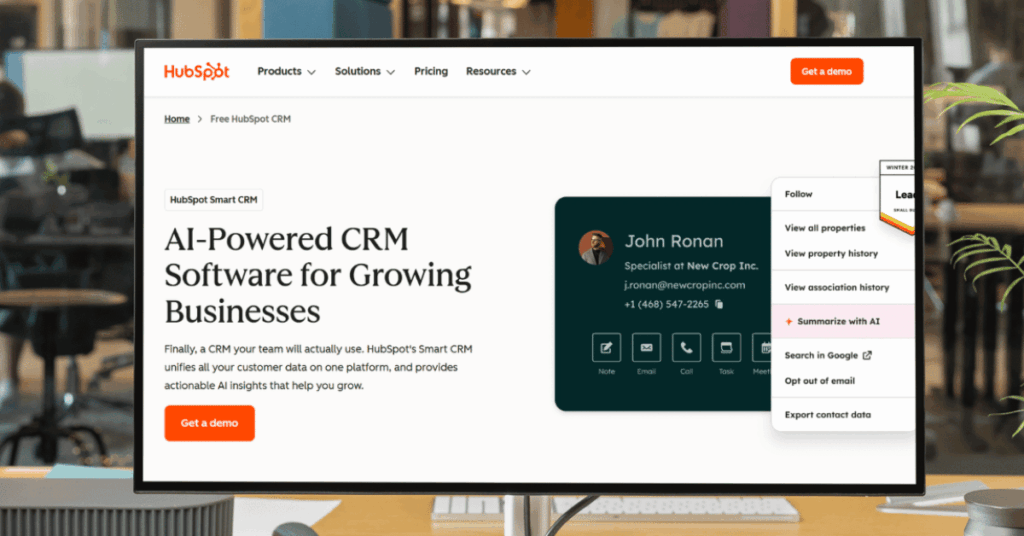
With hundreds of CRM platforms fighting for attention, HubSpot keeps winning new customers at a remarkable pace. The reasons are not complicated, but they stack up quickly when you look at the full picture.
Most of it comes down to accessibility. HubSpot made a bet early on that a generous free tier, a clean interface, and world-class educational content would build loyalty over time. That bet has clearly paid off.
- Free CRM tier with unlimited users, up to one million contacts, and no time limit
- Intuitive interface that teams actually enjoy using, reducing adoption friction
- All-in-one platform covering marketing, sales, service, CMS, and operations
- 1,500+ native integrations through the HubSpot App Marketplace
- Inbound marketing tools built into the platform’s DNA from day one
- HubSpot Academy with 200,000+ certified professionals worldwide
- Scalable pricing from free to Enterprise without switching platforms
- Fast implementation compared to competitors like Salesforce or Dynamics
- AI features (Breeze) for content drafting, lead scoring, and data enrichment
- Active partner ecosystem with thousands of agencies and consultants globally
The tradeoff is cost at the higher tiers. HubSpot’s paid plans can climb quickly once you add multiple Hubs, extra marketing contacts, and additional seats. But for many businesses, the total cost of ownership still beats the alternative of stitching five separate tools together.
Key Takeaway: The real reason HubSpot keeps growing is not any single feature. It is the fact that people actually use it. The best CRM in the world is worthless if your team ignores it, and HubSpot’s ease of use means adoption rates tend to be significantly higher than with more complex platforms.
HubSpot’s Share of the CRM Market
In the CRM platform category, HubSpot holds roughly 4.8% to 5.6% of the global market, placing it among the top three players behind Salesforce.
In marketing automation, the picture flips. HubSpot commands about 35% to 38% of that market globally, making it the category leader ahead of Adobe and ActiveCampaign.
Revenue Snapshot: HubSpot reported $2.63 billion in total revenue for its most recent full fiscal year, a 21% year-over-year increase. The company serves nearly 248,000 customers across 135+ countries.
HubSpot Customers By Country
HubSpot’s customer base spans 135+ countries, though North America still accounts for the lion’s share. The platform has been expanding aggressively in Europe and Asia Pacific, and international customers now make up over half the total user base.
Here is how adoption breaks down by the top markets:
- United States: ~47% to 59% of customers
- United Kingdom: ~10% of customers
- Canada: ~6% of customers
- Germany: ~3-4% of customers
- Australia: ~3% of customers
- France: ~2-3% of customers
- Netherlands, India, Brazil, Spain: ~1-3% each
Around 53% of HubSpot’s customers are now located outside the United States. The company’s international revenue share has climbed from roughly 15% to nearly 40% over the past several years, showing a clear shift toward global adoption.
Regional Revenue: Europe is HubSpot’s second-largest market, contributing about $825 million in annual revenue. Asia Pacific generated over $213 million, growing 18% year-over-year.
The CRM market is packed with alternatives, and HubSpot faces serious competition from platforms that target different budgets, company sizes, and use cases. No single tool is right for everyone, which is exactly why understanding the competition matters before you commit.
Here are the three biggest players that go head-to-head with HubSpot most often.
Top HubSpot Competitors
The CRM market is packed with alternatives, and HubSpot faces serious competition from platforms that target different budgets, company sizes, and use cases. No single tool is right for everyone, which is exactly why understanding the competition matters before you commit.
Here are the three biggest players that go head-to-head with HubSpot most often.
#1 Salesforce (21-23% CRM Market Share)
Salesforce is the undisputed leader in the CRM space, with over $34 billion in annual revenue and a customer base that includes the majority of Fortune 500 companies. It is built for complex, large-scale operations where deep customization and multi-department workflows are non-negotiable.
The tradeoff is cost and complexity. Most Salesforce implementations require certified consultants, and ongoing admin is often a full-time job. For smaller teams without dedicated IT resources, the learning curve can be brutal compared to HubSpot’s plug-and-play approach.

#2 Microsoft Dynamics 365 (5-8% CRM Market Share)
Dynamics 365 is Microsoft’s CRM and ERP platform, and its biggest selling point is native integration with the rest of the Microsoft ecosystem. If your company already runs on Outlook, Teams, SharePoint, and Azure, Dynamics slots in without friction.
About 42,900 companies use Dynamics 365, mostly mid-market and enterprise organizations in financial services, manufacturing, and government. Like Salesforce, it often requires professional implementation support, and the interface can feel overwhelming for teams used to simpler tools.

#3 Zoho CRM (3-4% CRM Market Share)
Zoho takes the opposite approach to Salesforce. It bundles 40+ business applications under Zoho One for as low as $45 per employee per month, making it the best value-for-money option on this list by a wide margin.
The catch is usability. Zoho’s interface feels dated compared to HubSpot, and getting everything configured properly takes real effort. If your top priority is maximum features per dollar, Zoho wins. If your top priority is getting your team to actually use the CRM daily, HubSpot tends to come out ahead.
Companies That Use HubSpot FAQ
Let’s Sort Out Your CRM
Whether you are rolling out HubSpot for the first time, migrating from another CRM, or trying to squeeze more value from an existing setup, we are here to help.
Our team of 30 CRM experts works across HubSpot, Salesforce, Dynamics 365, and more. We are vendor-neutral, so our only agenda is finding what works best for your business.
Get in touch with our team here and let’s figure out the right path forward together.